Spin Automatica is a specialized industrial system whose value depends on correct selection, stable operation, and dependable supply. This guide explains what “Spin Automatica” typically means in industrial contexts, how sourcing decisions affect performance, and what buyers should verify before purchase—covering compatibility, operating conditions, and maintenance planning with an objective, practical approach.
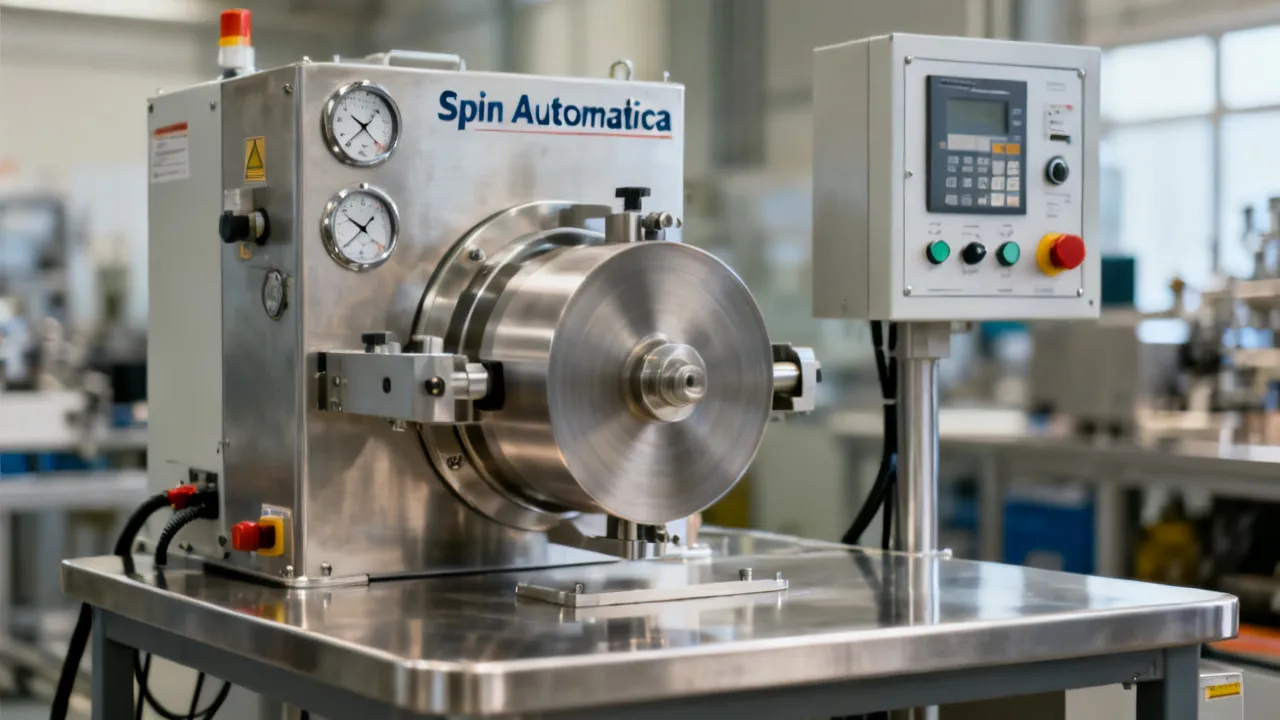
Spin Automatica should be evaluated as an integrated industrial capability—meaning your top outcome depends on the correct machine configuration, reliable supplier support, verified operating conditions, and a maintenance plan that matches your duty cycle. In practice, buyers often focus on headline specifications first, but the real risk comes from mismatches: wrong process compatibility, unclear installation requirements, or incomplete documentation. An expert approach starts with defining your application, then confirming that the “Spin Automatica” solution is technically aligned and supportable over time.
Because “Spin Automatica” can appear in different industrial catalog contexts (for example, as part of an automated spinning/processing line, an automation subsystem, or a branded machine series), treat the term as a starting reference rather than a complete technical description. Your buying checklist should therefore capture the exact model/version, automation interface, power requirements, safety controls, and expected throughput under your material and operating environment.
Before you proceed, it also helps to clarify the internal ownership model inside your plant. Who will own the machine technically after installation: automation engineering, mechanical maintenance, production engineering, or a shared team? When responsibilities are unclear, the machine may run initially but later drift out of control—particularly when operators or technicians start making undocumented adjustments to compensate for variations in incoming material. Strong governance and documented parameter control are essential parts of “what matters” long before purchase.
At a high level, “Spin Automatica” points toward automation-enabled spinning or rotational processing—typically designed to deliver repeatable motion, controlled environment conditions, and measured outcomes for downstream handling. Depending on your industry, “spin” operations may support tasks such as orientation control, processing uniformity, conditioning, or preparation for the next stage of manufacturing.
What makes an automated spin system distinct is not only the rotation itself, but the surrounding control strategy: sensors, programmed sequences, interlocks, and tooling/fixture alignment. In an expert procurement view, you are not just purchasing a mechanical device—you are acquiring a control system and a set of operational behaviors that must remain stable as materials, shift schedules, and operators change.
To reduce confusion during quoting, ask the supplier to describe the “spin” function in a way that maps directly to your process intent. For example, instead of accepting vague descriptions like “rotates with variable speed,” require specifics such as:
These questions may feel “engineering heavy” during procurement, but they prevent the most expensive scenario: commissioning that technically works but fails to meet the quality behavior your product requires.
Different “Spin Automatica” offerings may vary in rotational speed ranges, acceleration limits, allowable load characteristics, and control logic. Before you compare prices, confirm whether the system’s operating envelope matches your material behavior and tolerances.
In particular, request documentation that clarifies:
Configuration also includes what many buyers forget: software recipes, parameter sets, and operating modes. A spinning machine often needs tuned profiles—especially if your process includes dwell steps, controlled ramp rates, or synchronization with other station operations. Ask whether recipe parameters are:
Also ask about adjustability. If you later need to change materials (a different batch, viscosity, texture, or geometry), confirm which parameters can be changed safely and which require revalidation. A machine that only runs “perfectly” with one fixed recipe may look attractive in a pilot stage but becomes problematic as production evolves.
Automation value is realized only when the system integrates cleanly with your line. Ask how the “Spin Automatica” unit interfaces with upstream and downstream equipment: electrical connections, digital I/O, protocols, and safety signaling. If your production environment is already instrumented, verify that integration will not require excessive custom work.
From a practical perspective, integration questions often decide total cost of ownership more than the machine’s purchase price. Clear integration documentation reduces downtime during commissioning and helps maintain stable throughput over time.
Integration is also about signal quality and timing. Even if an interface “works,” race conditions, inconsistent part detection, or poor synchronization can cause scrap, jams, or repeated rework. Therefore, verify integration details such as:
Safety integration deserves equal attention. If “Spin Automatica” includes guarding, safety PLC functions, or interlocks, verify how those signals connect to your site’s safety architecture. Misalignment between machine safety states and line-level safety logic can lead to inconvenient downtime or—worst case—unsafe behavior. Ask for safety function descriptions, required safety categories/levels, and validation evidence (test documentation for safety circuits, not just a generic statement).
For systems grouped under “Spin Automatica,” consider the good service plan: spare parts availability, technician access, replacement lead times, and whether software/firmware updates are supported. Even with a robust machine, production continuity depends on predictable service response and correct maintenance procedures.
Lifecycle support is not limited to “can you send a technician.” It also includes the ability to maintain operational stability. Ask whether the supplier provides:
In many industrial environments, the hidden risk is obsolescence. If you buy today and the machine’s key electronics become unavailable in three or four years, you may face disruptive redesign costs. A lifecycle plan that includes end-of-life notice periods and supported alternatives can reduce this risk dramatically.
You may encounter references to a “price” for Spin Automatica in catalogs or quotes. However, the very responsible way to evaluate pricing is to compare TCO, not only the upfront number. While exact figures can vary by model, configuration, and region, you can still structure your evaluation to be objective.
As an industry practice, when buyers compare “Spin Automatica” quotes, they should request an itemized breakdown covering:
To move beyond “guessing,” develop a TCO model that includes these cost drivers:
When you compare suppliers, use comparable assumptions. If Supplier A includes integration engineering while Supplier B does not, the apparent price difference may hide a real cost gap. Similarly, if Supplier A provides detailed commissioning reports and parameter backups while Supplier B only provides basic manuals, the cost gap will show up later as troubleshooting time.
In procurement terms, “supplier details” are not background information—they’re risk control. For any “Spin Automatica” acquisition, the supplier should be able to supply verifiable documentation and clear responsibilities.
Look for suppliers who can provide:
When you evaluate supplier credibility, avoid assumptions based only on marketing claims. Instead, ask for specifics aligned to your operational needs and verify what is included in the delivered scope.
A high-signal question is: “What exactly do you provide versus what we must provide?” Require the supplier to list site responsibilities, such as:
This prevents the “integration gap” that often creates delays: the machine arrives ready to run, but key supporting work is still not finished because responsibilities were never defined.
Spin-based industrial systems typically require consistent safe operation and controlled conditions. Even if your environment seems stable, small changes—like variations in incoming material properties, changes in staffing, or minor modifications to upstream feeds—can affect repeatability and safety.
Before installation, confirm the requirements for:
If your facility operates under formal safety management systems, align the “Spin Automatica” documentation with your internal compliance practices. A well-documented safety strategy reduces both incidents and production interruptions.
Practical safety verification also includes asking how faults behave during runtime. For example:
For operators and maintenance staff, safety understanding is not optional. Make sure the supplier’s training includes the rationale behind safe procedures and not only button-by-button instructions. This matters because “panic recovery” during faults is a common human-factor risk.
From an industry expert standpoint, commissioning is where many automation projects succeed or fail. The goal is not simply “it runs,” but “it runs within defined performance boundaries and repeatability targets.”
A strong commissioning process typically includes:
To prevent the “very common failures,” pay attention to the less visible commissioning work: parameter validation, signal integrity, and fault handling logic. A machine that spins correctly during dry run can still fail qualification if the process interaction changes behavior (for example, load changes when material contacts tooling, causing torque spikes or slight speed deviations).
Commissioning should therefore include measurable verification steps, such as:
Also define acceptance criteria early. Many commissioning programs suffer because acceptance metrics are vague. A better approach is to write acceptance tests that specify:
Finally, include “knowledge handover” as part of commissioning. If the supplier installs the machine and sets parameters but leaves your team without the reasoning behind recipe choices, future adjustments become guesswork. Request parameter backup/export and documentation of how tuned settings were determined.
Any automated spin system requires a proactive maintenance approach. Maintenance is not an afterthought; it is a performance tool. Over time, you should expect wear in rotational assemblies, sensors, and fixtures, particularly when the duty cycle is high.
An expert maintenance plan should include:
When maintaining “Spin Automatica,” ensure technicians follow approved procedures. Uncontrolled changes to settings or ad-hoc repairs can create hidden quality issues that only surface later in production.
To make maintenance robust, define maintenance “decision rules.” For example:
Also consider whether your plant uses computerized maintenance management (CMMS) or condition monitoring systems. If so, ask the supplier whether the machine can export structured maintenance-relevant data: fault codes, run-time counters, cycle counts, and event logs with timestamps. Data availability can dramatically reduce mean time to repair (MTTR).
Spare parts should be treated like a strategy, not a purchase. Define minimum stock levels based on criticality and supplier lead times. For parts that cause long downtime when unavailable, keep a safety stock if the machine is mission critical.
The table below summarizes how buyers can compare “Spin Automatica” options in an objective way, followed by a practical step-by-step guide and the very common conditions/requirements to confirm with your supplier.
| Evaluation area | What to compare | Why it matters |
|---|---|---|
| Model and configuration | Exact model/version, tooling/fixture bundle, speed/control range | Ensures process compatibility and stable repeatability |
| Integration scope | I/O interfaces, safety signals, commissioning responsibility | Reduces ramp-up delays and rework during installation |
| Operating conditions | Temperature, dust/moisture constraints, electrical requirements | Protects reliability and safety in your actual plant environment |
| Documentation quality | Maintenance manuals, wiring diagrams, setup/calibration procedures | Enables consistent operation and disciplined maintenance |
| Warranty and service | Warranty terms, spare parts list, response timelines | Controls downtime risk over the system’s lifecycle |
| Training deliverables | Operator SOP training and maintenance training coverage | Improves day-to-day stability and reduces human-error incidents |
| Acceptance testing | Defined acceptance criteria, measurement methods, retest responsibility | Prevents “it runs but not accepted” disputes |
| Change control | Recipe versioning, permissions, parameter audit trail | Protects quality integrity over time |
Beyond the table, a sourcing checklist should force clarity. If any item below remains unanswered, consider it a procurement risk.
In procurement contexts, “Spin Automatica” typically refers to an automated, controlled rotational/spinning capability used within an industrial process. The exact meaning depends on the supplier’s model/version and the application line configuration. Always request the specific datasheet and technical documentation that correspond to the quoted unit.
Compare itemized proposals and total scope rather than a single headline price. Confirm installation, commissioning, training, documentation, warranty terms, and spare parts availability. If two quotes differ in included components or acceptance testing responsibility, the apparent cost advantage may be misleading.
Also verify whether the suppliers include “engineering hours” for integration work. If one quote includes integration engineering and the other excludes it, your TCO comparison must reflect the real effort you will spend (internal labor or third-party consultants).
Key conditions often include electrical supply stability, environmental exposure (dust/moisture/temperature), fixture/tooling compatibility, and correct parameter tuning during commissioning. Misalignment in these areas can reduce repeatability and increase maintenance needs.
Additionally, consider how variations in incoming parts affect the dynamics. Even small deviations in mass distribution or geometry can shift vibration behavior. If your process tolerances are broad, ask how the machine compensates or rejects out-of-range parts.
It can be, but it should be manageable when documentation is clear. Ask for verified interface details—electrical connections, I/O mapping, safety interlock requirements, and protocol expectations. The clearer the integration specification, the less commissioning time you will typically need.
Integration complexity often correlates with documentation quality. If the supplier provides only a generic I/O list, you may later discover edge cases: signal timing, handshake protocol differences, or safety reset behavior. Ask for example I/O wiring diagrams, sample handshake sequences, and typical fault recovery flows.
Maintenance frequency should follow the supplier’s maintenance schedule and depend on duty cycle and operating environment. Use preventive schedules, condition monitoring where available, and ensure calibration or parameter verification is performed according to the documentation.
For mission-critical lines, consider adding a maintenance “trial period” after commissioning. During the first few months, inspect more frequently (within reasonable bounds) to validate that wear rates match expectations. This improves long-term planning and reduces surprises.
Request model-specific datasheets, wiring diagrams, maintenance manuals, commissioning/acceptance guidance, and safety documentation relevant to the “Spin Automatica” unit. Also ask whether training materials and parameter records will be provided at handover.
Where possible, request sample deliverables: a sample commissioning report format, a sample maintenance checklist, and a sample alarm/fault code table. These artifacts help you judge the supplier’s readiness to support you operationally.
When evaluating automation systems such as Spin Automatica, industry buyers generally rely on structured verification: compatibility checks, integration validation, acceptance criteria, and lifecycle support planning. This approach is consistent with widely used safety and quality management principles found in international standards for industrial safety and quality systems.
For readers who want an anchor for “what good looks like,” relevant reference frameworks typically include ISO guidance for occupational health and safety management and ISO/IEC guidance for quality management practices. In procurement, these frameworks translate into evidence-based commissioning, documentation completeness, and disciplined maintenance processes rather than reliance on marketing claims.
Reliable sources to consult (standards and authoritative guidance):
In practice, “standards-aligned procurement” often means you treat commissioning evidence, maintenance instructions, and safety documentation as tangible deliverables—not as something you receive “eventually.” For example:
It also means you define responsibilities. If your plant is expected to provide parts, test materials, electrical infrastructure, or network configuration, those responsibilities should appear in contractual documents. Without explicit responsibility mapping, you may experience “finger-pointing” delays during acceptance testing.
Beyond the core procurement topics, there are additional, high-impact checks that separate a smooth industrial deployment from a frustrating one. These checks often get missed because buyers concentrate on speed, power, and the headline configuration. But “Spin Automatica” performance depends heavily on details that show up only when you operate in real production conditions.
1) Tooling and fixture reality
Many systems rely on fixtures to accurately position parts. Misunderstanding fixture responsibilities can lead to weeks of delay. Clarify:
Additionally, ask whether fixtures are standardized or custom. Custom fixtures can be accurate but may require longer lead times and may not be easily replicated if a spare is needed quickly.
2) Material variability and process robustness
If your input materials vary by batch, supplier, moisture content, or geometry, verify that the spin process is robust. Ask for:
Process robustness is especially important when the machine will be operated by multiple shifts. A robust system can tolerate operator variation and still produce stable output; a fragile system may produce quality drift if operators do not follow procedures perfectly.
3) Quality measurement and traceability
Even if you don’t currently run formal traceability, plan for it. Ask the supplier how the machine logs production runs and events. Good systems support:
This becomes critical when you investigate quality issues. If a batch shows problems, you need to identify whether recipe changes, parameter drift, or sensor faults occurred. A well-designed “Spin Automatica” system provides the data needed to troubleshoot systematically.
4) Software, permissions, and change control
A common failure mode in industrial automation is uncontrolled parameter change. Ask for:
If your quality system requires evidence of configuration integrity, you will benefit from audit trails and versioned recipes.
5) Reliability engineering mindset
“Reliability” is more than “it works.” It includes how failure modes are managed. Ask the supplier for:
Also ask whether the machine provides “predictive” indicators (even if simple, such as service timers or trend charts). Predictive maintenance reduces unplanned downtime and improves planning.
6) Commissioning acceptance evidence
Commissioning documentation is sometimes delivered as a “folder,” but not in a form your team can directly use. Specify the deliverable format. For example:
If you require regulatory or customer-driven compliance, the form and completeness of these documents matter.
7) Training that matches your reality
Training should reflect who will operate the system and how often. A one-time workshop for a few engineers is not enough. Ask about training coverage:
Training also should include “what not to do.” Many incidents happen when someone bypasses interlocks or uses incorrect reset sequences. Good training reduces unsafe workarounds.
8) Documentation completeness and usability
Maintenance manuals must be usable under real conditions. Ask the supplier:
When documentation is incomplete, technicians resort to informal knowledge transfer, which becomes brittle when staff changes.
9) Network and cybersecurity basics
If “Spin Automatica” connects to your network, confirm basic requirements. For many plants, cybersecurity is no longer optional. Ask:
This matters because engineering changes are sometimes required after commissioning. Secure access prevents unauthorized edits and protects safety and quality integrity.
10) Operational ramp-up plan
Finally, you should plan your ramp-up strategy. Don’t assume full-rate production on day one. Ask the supplier for:
A structured ramp-up reduces the likelihood of quality problems that can become expensive to contain.
Spin Automatica should be treated as a production capability whose success is determined by fit-for-purpose configuration, accurate integration planning, verified operating conditions, and a supplier-supported lifecycle. When you evaluate the full scope—installation, commissioning, training, documentation, warranty, and service—you reduce the risk of downtime and quality variance. Use the comparison table and step-by-step sourcing guide as a practical framework, then confirm every critical requirement in writing with your supplier before final commitment.
Above all, make sure you are not purchasing a “machine” alone. You are purchasing a controllable industrial behavior that must remain safe, repeatable, and supportable. The buyer who asks detailed questions about interfaces, safety functions, parameter control, commissioning evidence, and maintenance strategy is the buyer most likely to achieve stable production outcomes from day one and across the machine’s operating life.
Striking the Perfect Balance: Navigating Premiums and Out-of-Pocket Expenses in Senior Insurance Plans

Explore the Tranquil Bliss of Idyllic Rural Retreats

How to Make Lasting Memories at Disneyland Attractions

Affordable Phones and Plans for Seniors

Affordable Full Mouth Dental Implants Near You

Unlock the Top Kept Secrets to Finding Your Ideal Dentist for Flawless Dental Implant Results!

Discovering Springdale Estates

The Guide to Car Trading

Affordable Cell Phones Without Plans


Spin Automatica: An Expert Guide to Smart Automation
Spin Automatica is a framework for configuring automated spin-based processes with stable performance, traceable inputs, and practical supplier selection. This guide explains the technology context behind automated spin systems, how “spin” functions in manufacturing workflows, and what to verify before purchase—focusing on objective requirements, integration, and procurement due diligence.
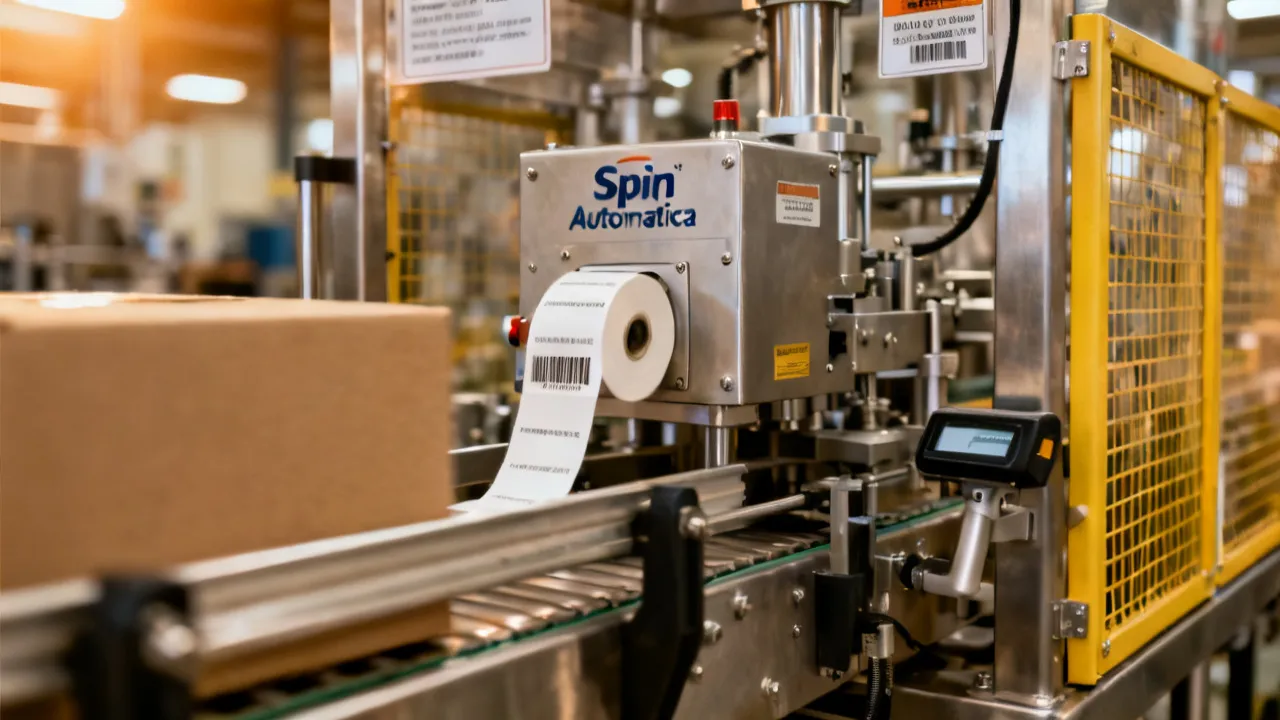
Spin Automatica for Smarter Production Management
This guide explains how Spin Automatica systems support automated handling, throughput control, and consistent product presentation across production stages. Spin Automatica refers to industrial automation solutions used to synchronize mechanical actions with sensors, quality checks, and operator workflows. The article reviews how to evaluate suppliers, what to confirm during installation, and which requirements influence total cost and performance.
Spin Automatica: Expert Guide to Use and Sourcing
Spin Automatica is a specialized industrial system whose value depends on correct selection, stable operation, and dependable supply. This guide explains what “Spin Automatica” typically means in industrial contexts, how sourcing decisions affect performance, and what buyers should verify before purchase—covering compatibility, operating conditions, and maintenance planning with an objective, practical approach.
