If you’re asking, “I Need a New Phone,” this objective guide outlines how government-supported wireless programs may help you obtain a handset and stay connected. It reviews major Lifeline/ACP-style offerings, eligibility patterns, and application steps across SafeLink Wireless, Assurance Wireless, StandUp Wireless, Access Wireless, and True Wireless, with practical decision criteria and FAQs for choosing a plan that fits your usage.
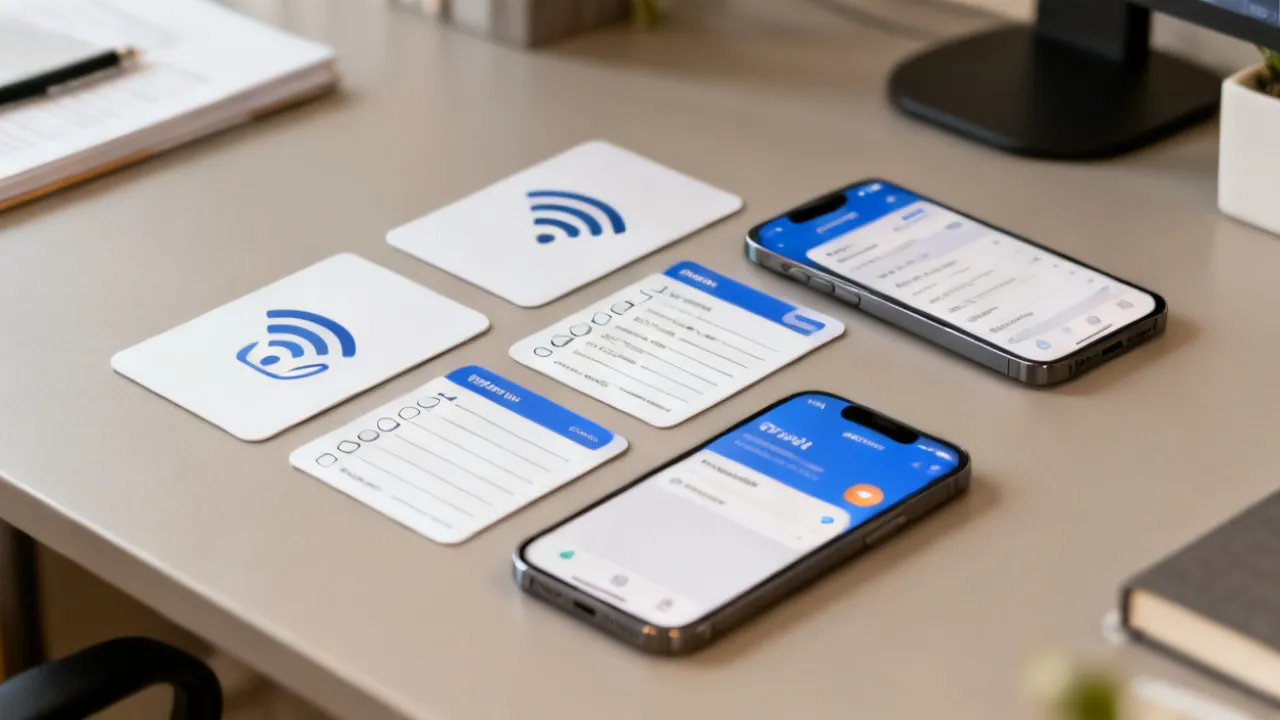
If you’ve reached the point where you think, “I Need a New Phone,” the smartest first step is not to compare handset models—it’s to verify eligibility and understand what a government-supported wireless plan typically includes. In the U.S., programs commonly associated with Lifeline and the Affordable Connectivity Program (ACP) help qualifying households access voice, text, and data through participating providers. The exact device quality, data allowances, and any upgrade fees can differ by provider and by the specific benefit package available in your area.
From an industry standpoint, there are three practical considerations that determine whether a plan feels like a real solution rather than a temporary compromise: (1) whether the application can be completed successfully with acceptable documentation, (2) whether your daily usage pattern matches the plan’s data structure and speeds, and (3) whether the offered handset meets your needs for reliability, software updates, and app performance.
In other words, “needing a new phone” is rarely only about the phone itself. It’s about the whole service experience: how reliably calls connect, whether texts arrive on time, whether data actually works for your most important tasks, and whether the device you receive will remain usable over the next 1–2+ years as apps update and networks change.
This guide expands on each of those components—eligibility, device fit, and plan terms—so you can make a decision with fewer surprises and less frustration.
Government-supported wireless programs are generally designed to reduce connectivity barriers for households meeting income thresholds or participating in specific assistance programs. While marketing phrases vary, the common structure includes a handset option (often an Android device) or a “bring your own device” pathway, plus service that usually covers unlimited or near-unlimited voice and text, paired with a data allowance that may be limited or tiered.
In very cases, you should expect some combination of the following:
Because your goal is good usability, it’s essential to treat “new phone” as a systems problem: coverage quality, data experience, Wi‑Fi reliance, and device reliability matter as much as the initial subsidy.
It also matters because a plan can look generous on paper but still feel inadequate in real life. For example, if you work remotely or rely on telehealth, you need data that’s stable and fast enough—not simply “unlimited” in name. If you primarily need texting and basic navigation, a smaller high-speed data allotment may be perfectly fine.
Another important point is that many supported-wireless setups are optimized for core connectivity. That often means the plans are designed to keep voice/SMS consistent and provide a baseline data tier. The “best” plan for you is the one that matches how your phone is used, not the plan with the most marketing language.
| Official plan website | Services included (typical program coverage) | Possible additional package costs |
|---|---|---|
| SafeLink Wireless | Handset support or BYOD; unlimited talk and text; data allowances depending on plan | Premium device upgrades and/or extra data may require payment |
| Assurance Wireless | Affordable Android smartphone option; unlimited talk and text; data allowance | Higher-tier high-speed data or optional services may have charges |
| StandUp Wireless | Affordable handset option or BYOD; unlimited talk and text; data plans | Premium device upgrades or additional data may cost extra |
| Access Wireless | Unlimited voice/text; limited high-speed data (commonly aligned with Lifeline/ACP benefits) | Data boosts and device upgrades may involve fees |
| True Wireless | Government-supported phone options; voice and data plans | Upgrades to better devices or additional data plans may cost extra |
Links to the official websites (source of information):
source: www.safelinkwireless.com
source: www.assurancewireless.com
source: standupwireless.com
source: www.accesswireless.com
source: www.gotruewireless.com
Note: The exact handset model, data tier, and availability can depend on program rules, state participation, inventory, and network configuration.
Eligibility is the gatekeeper. Many people who say “I Need a New Phone” never reach the decision stage because they skip eligibility verification or overlook documentation requirements.
Across major providers associated with Lifeline and connectivity support initiatives, eligibility commonly centers on:
Because program definitions can change, you should always confirm your eligibility using the provider’s application flow and any official program documentation.
In practice, one of the most common reasons people get stuck isn’t that they’re ineligible—it’s that they have the right status but can’t produce the right documentation in a clear, verifiable way. That’s why it’s helpful to think ahead about what documents you have, what documents you can quickly access, and how those documents will look when photographed or scanned.
While each provider has its own document checklist, most eligibility systems require a combination of:
To avoid rejections or delays, the following practical rules help even when the checklist differs:
If you’re applying with a phone that already has issues, consider having the document-ready steps done ahead of time using a trusted device (for example, a friend’s phone, a library computer, or a desktop scanner) so the submission does not depend on a struggling handset.
Application experiences vary by provider, but there are recurring steps you can prepare for in advance. Think of it like a checklist: if you complete these steps correctly, you reduce delays and avoid re-submission cycles.
Also, consider the timing. If your current phone is barely functioning, plan the application with enough buffer so you are not forced to improvise activation setup while you’re dealing with a broken charging port, a damaged screen, or a device that won’t reliably connect to cellular service.
Even when providers have different flows, the underlying logic is similar: the program wants to make sure you qualify and that the service is provisioned to the correct location and account. That means you should assume the process is sensitive to document clarity and correct entry of details.
Once you’re eligible, the “I Need a New Phone” decision becomes more nuanced than simply accepting the first available handset. In a telecom advisory role, I recommend evaluating these factors before activation or immediately after receipt.
Many people think a “government phone” is automatically a perfect replacement for their current device. But most phones and most networks have tradeoffs: screen size, processor speed, memory, battery capacity, and software update support can all affect how smoothly the handset performs. Likewise, plan data policies determine whether everyday tasks like maps, messaging, and streaming can be done without constant worry.
Some plans include limited high-speed data with policies that reduce speeds after data thresholds are met. If your household relies heavily on streaming, navigation, or video calls, you may prefer a plan with a higher data tier or optional upgrades.
Understanding “after the threshold” matters because the real experience often shifts at the boundary. For example:
A useful way to decide is to list your top three data tasks. Then ask: do those tasks need consistent high-speed, or will they work over reduced speeds? Navigation often tolerates some variability because it refreshes, but high-resolution video typically does not.
If you have access to Wi‑Fi at home, many users can stretch limited high-speed data by downloading updates and media over Wi‑Fi, and using cellular mainly for communication and short lookups.
Coverage can vary significantly by neighborhood and building construction. Even if a provider uses the same underlying network technology in a region, performance can differ by plan provisioning and device capabilities.
Also consider how your phone behaves during movement. A plan may have adequate signal at your apartment but drop quality when you go to a job site or travel to a store. If you have a commute or regular errands, the best evaluation includes a short “real-life” test: place a call while walking outdoors, then repeat the test indoors, and then compare data behavior using an app you actually use.
One more practical point: some troubleshooting steps are different for supported-wireless devices. For example, you might need to re-check APN settings, restart the phone after activation, or ensure the device is not stuck on an old Wi‑Fi calling mode. Knowing this before you rely on the service can prevent a “it doesn’t work” situation that turns out to be a simple configuration issue.
Government-supported handset models can range from basic entry-level devices to mid-tier smartphones. For good satisfaction, consider:
When you receive a new supported device, it may come with a lightweight interface and essential apps. Still, you should prepare for a short “setup period” where you install your most important apps, allow updates, and transfer contacts/messages if needed. A phone with too little storage can become frustrating during app updates and system patches.
From a long-term usability perspective, you want enough internal memory so you can:
Even if the phone is adequate at first, a phone that cannot receive security updates may become risky later if you use it for banking, employer portals, or important authentication. That does not mean a supported phone is “unsafe,” but it does mean you should ask yourself whether you’ll need to keep the device for multiple years.
Many providers offer base service with optional upgrades. These can include premium device exchanges, additional data boosts, or features like international calling. Review the upgrade policy before requesting it, and verify whether fees apply at activation or at the time of upgrade.
“Surprise” charges typically happen when someone chooses an add-on without realizing that:
To reduce this risk, you can write down the plan name, the selected handset model, and any optional features offered. If you’re unsure whether an option triggers a charge, ask the provider’s customer support or look for a clearly stated “price per month” or “one-time fee” in the confirmation page.
If you choose BYOD, check for any device upgrade fees or compatibility requirements that may shift costs. Some setups may require an approved phone model, an unlocked device, or compliance with network technology (for example, specific LTE bands or radio profiles).
Connectivity has become a utility-like requirement for work, education, healthcare access, and day-to-day communication. In the U.S., multiple federal and programmatic initiatives aim to reduce affordability barriers. Providers that participate in these ecosystems typically follow policy-defined eligibility requirements and offer standardized service components (voice/text/data) with some flexibility for handset delivery and device upgrade pathways.
For readers who want a grounded view of how affordability programs are designed, it helps to reference the U.S. regulatory and program information ecosystem. For example, the Lifeline program is administered under federal communications rules, while ACP was designed to reduce broadband affordability through specific funding mechanisms. Because these frameworks can evolve, the very reliable place to confirm current details is the official provider documentation and federal program guidance.
In everyday terms, the structure tends to look like this:
This approach aims to create a predictable experience for providers and for consumers. Predictability matters because households relying on these plans often need stable connectivity for essential tasks—scheduling medical appointments, maintaining contact with family, receiving work updates, and accessing online services.
Eligibility and plan terms are essential, but you can still end up dissatisfied if the handset doesn’t match your daily needs. Below are practical device-fit considerations you can use when you receive a handset model or decide to pursue BYOD.
For many users, a phone isn’t a tool you just “own”—it’s a tool you depend on. A weak battery or unreliable charging port can quickly turn a subsidized upgrade into a constant inconvenience.
When comparing devices (or when you receive your handset), pay attention to:
After activation, consider doing a short routine: use the phone for calls and messaging for a few hours, then check the battery behavior. If the battery drops dramatically under normal use, that’s a sign you should document the issue and reach out to support if the device is covered under program terms.
Even a phone with a decent screen can feel slow if the system struggles with storage or if the processor is underpowered for modern app requirements.
Consider what you need on your phone:
Before deciding you’re “done” after activation, install (or re-install) these key apps and run them for a short time. If the phone struggles to open apps or repeatedly reloads, it may not be the right fit even if eligibility and plan terms are correct.
Supported phone models are often older than the newest consumer devices. That’s not necessarily a problem, but security updates do matter because they patch vulnerabilities in the operating system and core components.
When you first turn on a new handset, allow system updates. Then check the “security patch” date if your device interface provides it. If the phone is very out of date, ask customer support about whether additional updates are available or if the program has newer replacement options.
Also consider app updates. If the phone is too old to support updated versions of your essential apps, you may hit compatibility issues (for example, a required update for a messaging app or authentication app). It’s better to discover those issues quickly rather than after you’ve relied on the device for a major task.
Many users focus on speed and data but overlook readability. If you have vision challenges or frequently use your phone in bright daylight, screen quality matters.
Evaluate the handset’s:
If the device is intended as an essential communication tool, you want it to be comfortable to use consistently.
BYOD can be attractive because it preserves the phone you’re already comfortable with. However, BYOD adds technical requirements and potential compatibility risks. If you want BYOD, treat it as a checklist task, not an assumption.
If any of these issues apply, a program-issued handset may actually be the smoother experience. In that case, you benefit not only from subsidy but also from a device you can count on to be provisioned correctly.
After approval, some of the most frustrating situations come from setup problems rather than eligibility problems. Plan to take a little time after activation to verify the fundamentals.
If your plan uses a SIM card, confirm that it is seated properly (for physical SIM). If your plan uses eSIM, follow the provider’s activation instructions carefully and complete every step.
If your phone does not connect to the cellular network, rebooting after activation is often helpful. If it still fails, the problem can be provisioning-related and may require support escalation.
Some users assume the plan’s data is working because the phone is connected to Wi‑Fi. That’s why you should verify cellular behavior by toggling Wi‑Fi off for a few minutes and repeating your data test.
If your plan’s high-speed data is limited, the phone might load pages quickly at first. Then it slows. Pay attention to whether it slows after you have used some portion of high-speed data or whether it’s a deeper performance issue.
If you use your phone for important logins, remember that authentication apps and SMS-based codes require reliable SMS delivery. After activation, verify that you can receive SMS codes for one or two essential accounts (for example, an account used for scheduling or work).
Don’t wait until you’re locked out of something urgent. Test early while you still have patience and time to troubleshoot.
Even when people qualify, small errors can cause delays, re-submissions, or dissatisfaction. Here are patterns that frequently appear in supported-wireless application and activation experiences.
Blurry uploads, cropped images, and missing pages are a top reason for verification failures. Use good lighting and ensure your file captures every relevant detail.
If your name formatting or address entry differs from what your documentation shows, verification systems may reject it. Pay attention to apartment numbers, punctuation, and abbreviations.
Many plans describe unlimited voice and text but provide data with limitations. If you stream frequently or do video calls, you need to understand whether high-speed data is capped.
Some coverage issues show up indoors. If you test only outside or only near a window, you might miss the real problem. Test in your most used rooms and at least one workplace or regular location.
A new device often requires initial setup time: updates, app installs, accessibility settings, and transferring contacts. If your life depends on the phone for appointments and messaging, plan that setup time rather than rushing through it.
Often, plans offer a handset option based on availability and eligibility verification. Some providers may allow choice among limited models, while others assign a device from an approved list. If BYOD is allowed, you may not need a handset at all.
Practical tip: ask what models are currently in stock for your area and what the “best value” option is for your needs (battery, storage, performance). If you have specific essential apps, ask whether the device meets the typical requirements for those apps.
Very applications require proof of identity and proof of address, plus documentation that verifies eligibility (such as participation in qualifying assistance programs or income documentation). Exact requirements depend on your eligibility pathway and the provider’s verification process.
Practical tip: before starting the application, lay out all documents and ensure your personal details match exactly what you’ll type into the form. It’s easier to correct at the start than after you’ve already submitted.
Plans are commonly described as including unlimited talk and text, with data allowances that may be limited and structured as limited high-speed data plus potential speed reduction after thresholds. The precise data details depend on the provider and the plan package assigned to you.
If the plan uses speed reduction after a threshold, it may still be usable for messaging and web browsing, but it may not be ideal for frequent streaming or large downloads.
Some providers support BYOD for eligible devices. You must confirm compatibility requirements (such as network technology and device lock status) before you rely on your current handset.
Practical tip: confirm BYOD eligibility before selecting it as your option. If the device turns out to be incompatible, you might need to switch to receiving a handset, which can add time.
No. Approval depends on eligibility verification, documentation quality, and program rules. Device availability can also vary. After you submit your application, you should monitor your status through the provider’s process.
If you need the device quickly, choose a plan and provider with clear shipping/fulfillment timelines in your area and prepare for the possibility that the first choice might not be immediately available.
Base plans may have no additional monthly cost for eligible participants, but optional upgrades can carry charges. Common examples include premium device upgrades, additional data, or add-on services such as international calling.
Practical tip: always check the confirmation page or order details for the exact cost of each optional item. If something is unclear, ask support before you confirm.
Timelines vary by provider, verification method, and document review. In practice, incomplete uploads or mismatched information can delay verification. Preparing accurate documentation reduces delays.
If you submitted and don’t hear back, don’t assume it’s rejected. Some systems update slowly, and you may need to check status using the provider’s portal or contact support.
Having multiple qualifying program enrollments may help you meet eligibility requirements, but you still must complete the provider’s application and verification steps. The provider may ask you to indicate which program you’re using to qualify.
Practical tip: if you have more than one qualifying program, choose the one that provides the clearest and easiest-to-document eligibility path. If the provider asks for a specific proof type, have that document ready.
If you want to go one step further, also create a “first-week phone plan.” For example: on day one, set up the SIM/eSIM and test calls/text. On day two, test data off Wi‑Fi. On day three, install the most important apps and verify logins with SMS codes. This structured approach reduces the chance that you discover issues only after a deadline.
Disclaimer: (1) The above information comes from online resources, and the data is as of October 2023. (2) This website cannot guarantee that applicants will definitely get a government affordable phone. For specific application requirements and how to obtain it, please refer to the official requirements of the provider. This website will not be updated in real time.
https://www.safelinkwireless.com
https://www.assurancewireless.com
https://standupwireless.com/
https://www.accesswireless.com
https://www.gotruewireless.com/
Striking the Perfect Balance: Navigating Premiums and Out-of-Pocket Expenses in Senior Insurance Plans

Explore the Tranquil Bliss of Idyllic Rural Retreats

How to Make Lasting Memories at Disneyland Attractions

Affordable Phones and Plans for Seniors

Affordable Full Mouth Dental Implants Near You

Unlock the Top Kept Secrets to Finding Your Ideal Dentist for Flawless Dental Implant Results!

Discovering Springdale Estates

Unveiling RS Sul Telecom Services

The Guide to Car Trading

Affordable Phones and Plans for Seniors
Discover the top deals on new phones and plans tailored for seniors, including discounts on 5G technology and unsold models.
Affordable Cell Phones Without Plans
Discover affordable cell phones for sale without plans, exclusive discounts for seniors, and tailored mobile plan options in your area.

Navigating Government Phone Programs
This guide provides an expert analysis of government-supported phone programs for eligible individuals, offering insights into available providers and their services. Affordable phones are often a necessity for individuals under economic constraints, aiding in communication, job searches, and access to emergency services. The article delves into eligibility criteria, application processes, and compares popular service providers in various regions.
Unlocking the Top Cell Phone Deals
Discover unbeatable cell phone discounts, plans, and offers for seniors and iPhone enthusiasts without contracts.
Navigating Affordable Phone Offers
Discover the essential details about government-assisted phone programs aimed at providing budget-friendly devices to eligible individuals. These programs offer complementary mobile phones and services to qualified beneficiaries, ensuring connectivity at minimal expense. This guide breaks down how to access such benefits and what conditions apply.
How to Apply for a Affordable Phone
This guide provides insights on how to apply for a affordable phone through government-sponsored programs. Understanding how these programs operate and their eligibility requirements is essential. These initiatives aim to support individuals in low-income households or those enrolled in specified government assistance programs by providing basic communication tools.
