If you need a new phone, this guide explains how Lifeline-style government phone programs work and what to expect from major providers. It reviews plan types, device options, documentation, and practical steps to apply through official channels. The goal is to help you compare eligibility pathways objectively before choosing a carrier-managed solution.
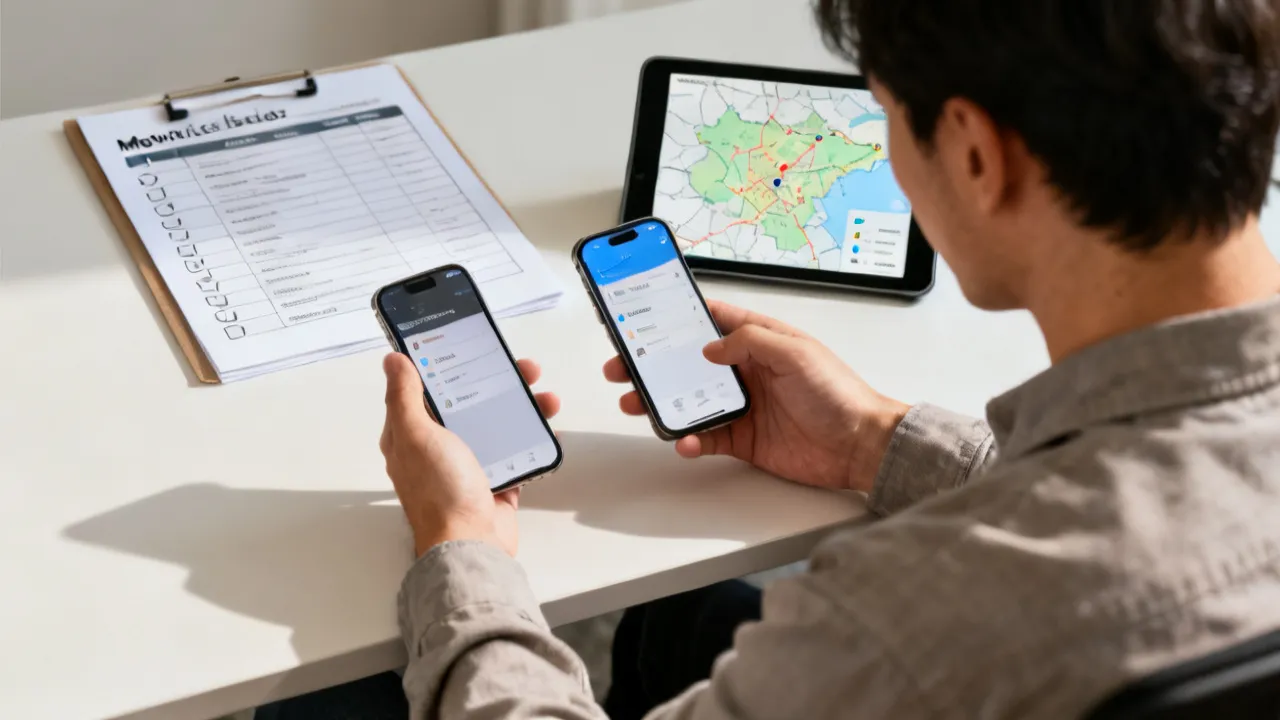
If you’re searching “I Need a New Phone,” it usually signals two connected needs: reliable service and a device that actually works for calls, texting, and daily access to online services. In the U.S., government-supported programs commonly delivered through Lifeline and related initiatives can help eligible households obtain a smartphone and service—often with device choices and limited data that may vary by plan and state.
From an industry perspective, the key to avoiding frustration is understanding how eligibility verification, documentation, and plan constraints interact. A “new phone” outcome depends less on marketing and more on whether your household qualifies and completes the application correctly the first time.
Even when programs appear similar on the surface—smartphone offers, talk/text, and a data allowance—each provider can structure the package differently. Some emphasize a broader device assortment (or bring-your-own-device compatibility), while others are more standardized by model. Some plans include voice and text plus a capped data amount; additional high-speed data and premium device upgrades may be available for an extra cost.
Therefore, “I need a new phone” is top treated as a requirements exercise:
Below is a practical comparison of major providers that support government-funded phone programs. While exact benefits can change by state and eligibility tier, the recurring pattern is: qualified applicants receive a smartphone and a plan with voice, messaging, and a data allowance. Optional upgrades (such as higher-speed data or premium models) may require additional payment.
The table below summarizes the providers featured in this guide. It focuses on the program website, what service categories the plans typically include, and whether additional package charges may apply for upgrades.
| Provider (official site) | Services typically included | Possible additional package costs |
|---|---|---|
| SafeLink Wireless | Smartphone offer (or BYOD option), unlimited talk/text, and plan-based data allowance | Premium device upgrades and/or additional data (varies by plan and state) |
| Assurance Wireless | Affordable Android smartphone offer, unlimited talk/text, and data allowances | High-speed data or international calling upgrades (optional) |
| StandUp Wireless | Smartphone offer (or BYOD option), unlimited talk/text, and plan-based data | Premium phone upgrades and extra data (available for a fee) |
| Access Wireless | Unlimited voice and text, limited high-speed data with applicable benefits | Data boosts and device upgrades (optional) |
| True Wireless | Government-supported phone offer, voice and data plans (eligibility-dependent) | Better-device upgrades or additional data plans (optional) |
Source websites for plan information:
SafeLink Wireless: www.safelinkwireless.com
Assurance Wireless: www.assurancewireless.com
StandUp Wireless: standupwireless.com
Access Wireless: www.accesswireless.com
True Wireless: www.gotruewireless.com
(These are the source of the information summarized above.)
Across providers, the eligibility pattern is designed to align with government assistance. While the details can differ at the state level, the core criteria typically include income thresholds and/or participation in qualifying programs.
In practical terms, qualification usually comes from one of two major paths:
The important consumer takeaway is that “I need a new phone” is often solved faster when you choose the eligibility path you can document most easily. If you have proof of enrollment in SNAP, Medicaid, SSI, or similar programs, that can sometimes be simpler than calculating and documenting income.
From a consumer-experience standpoint, the very important variable is not “which provider has better marketing,” but how efficiently you can complete verification. Below is a generalized workflow that aligns with how these programs are typically administered.
Although the steps below are presented in a clean sequence, real-life applications can involve small detours—such as being asked to resubmit documentation, clarifying household information, or waiting for a verifier to confirm your enrollment. Building good habits up front can reduce the likelihood of delays.
Before applying, confirm you’re eligible under either:
If you’re unsure which benefits qualify, approach it like a checklist: locate the specific program documents you have, then match them to the provider’s qualifying list. Many delays happen when people apply using an assistance program that isn’t accepted under the specific wireless lifeline-style eligibility rules.
Different providers offer similar service categories but may differ in device selection, BYOD availability, and the exact structure of data allowances. If you already have a compatible device and prefer it, look for BYOD-supported options.
Also consider the “real world” side of selection. If you’re trying to get service quickly, choose the provider whose application flow you can complete with the documents you already have. Sometimes the best offer isn’t the one with the largest data allowance; it’s the one you can activate without repeated verification rounds.
Very applications require proof that can be checked. Common materials include:
Tip: keep scanned copies readable. Blurry uploads are a common cause of delays.
It can help to prepare documentation in advance even if you’re not sure which provider you’ll pick yet. For example, if you plan to apply to multiple providers, keep a clean scan of your ID and a recent document showing qualifying enrollment or income information. Having these ready can prevent you from redoing the same scanning step multiple times.
Very providers accept online applications. After submission, the provider (or a verifier) checks your information. If requested, you may need to upload additional documents.
During verification, pay attention to details such as:
Small mismatches—like an address without a unit number when your ID includes one—can be enough to prompt a request for clarification.
When your application is accepted, confirm:
Many people focus on “how many gigabytes” and stop there. But what often matters more is how the plan treats usage after the allowance. Some plans have speed throttling; others may reclassify data. Your decision should reflect how you use your phone—navigation and video calls have different requirements than messaging and basic web browsing.
Once you receive the smartphone (or complete BYOD activation), confirm:
If you receive a new device, do a quick “first hour” check: test a call to someone you trust, send an SMS, open a commonly used app (like email or transit), and confirm whether you can access maps and load pages. Catching issues early can prevent you from losing days trying to troubleshoot while eligibility or service provisioning is still settling.
While the program framework is broadly consistent, each provider may present its application experience differently. Here are objective, non-marketing observations that typically matter to applicants.
A helpful mindset is to treat the application and enrollment like a small project with checkpoints: eligibility confirmed, application accepted, plan chosen, device shipped/activated, phone tested. If anything breaks at any checkpoint, you can narrow down where the problem occurred.
SafeLink Wireless is structured around smartphone provisioning or BYOD options depending on your situation. Plans typically include unlimited talk/text and a data allowance that can vary by plan and state. Applicants should review whether any premium device upgrades would carry additional costs if you want a higher-end model.
From an applicant perspective, the SafeLink flow often matters most in two areas:
If you’re BYOD-capable, ensure your phone is compatible before relying on it. Compatibility checks can sometimes change how quickly you can activate and start using the device.
Assurance Wireless commonly emphasizes Android smartphone offers alongside unlimited talk/text service. Data is included as an allowance, and optional upgrades—such as high-speed data or international calling—may be available for an added fee. If international calling or consistently higher-speed data is a must, review upgrade options during the plan selection stage.
Applicants often benefit from taking a moment to compare the “everyday usability” of the offered Android device. While the program’s purpose is affordability, a phone’s usability affects how effectively it supports essential tasks:
Even when devices differ across regions or time, the steps you take—ensuring your phone can install the apps you need and that data works reliably—remain consistent.
StandUp Wireless supports applicants who either want a smartphone delivered as part of the program or prefer to bring a compatible device. Talk/text are commonly unlimited, and data comes as part of the plan structure. For many households, the very relevant decision is whether you will accept the standard device tier or pursue an upgrade later.
When weighing a standard tier vs. an upgrade, consider your timeline. If you need the phone quickly for urgent tasks—such as signing up for services, receiving job-related messages, or contacting healthcare providers—accepting the standard device tier may reduce downtime. If your phone is only slightly outdated and you can wait, a later upgrade option might make sense.
Another real-world consideration: some households use older phones for specific tasks (like a simple camera or as a backup). If that describes your situation, BYOD can function as a continuity strategy—keeping your familiar device while obtaining reliable service at a lower upfront cost.
Access Wireless plans often include unlimited voice and text and limited high-speed data under Lifeline and related benefits. Like other providers, it may offer data boosts and device upgrades as optional paid additions. If your daily usage includes navigation or video calls, confirm what “limited high-speed data” means for your typical monthly pattern.
Understanding “limited high-speed data” can be tricky, so it helps to translate it into your usage reality. Ask yourself:
If “limited high-speed data” is your only data, you’ll want to plan your phone habits accordingly or be ready for optional data boosts.
True Wireless offers government-supported phones and service under eligibility requirements tied to assistance programs or income thresholds. Applicants should treat the application as a documentation exercise: complete eligibility verification carefully to avoid delays. Optional upgrades to better devices or additional data plans may be available after enrollment.
For some applicants, the most important step is recognizing that the program experience is documentation-driven. If you have to re-upload files due to clarity issues or mismatched details, the enrollment timeline can stretch. To reduce this risk, keep your documentation:
After approval, be sure to review plan terms carefully so there are no surprises about data access or optional add-ons.
To choose appropriately, map your usage to plan attributes.
This question—what counts as “need”—is where many people lose time. They search for the phone first and only later discover that the plan data level doesn’t match their expectations or their device needs (for example, needing a bigger screen, enough storage, or hotspot access).
Reliability should be thought of as more than “it works sometimes.” If you rely on your phone to stay in contact with family, access healthcare portals, or receive time-sensitive messages, prioritize providers and plans that offer dependable network access in your area. Even though lifeline-style programs are often regulated, local network coverage can still affect user experience.
Secondary needs are not always optional in practice. For some households, international calling is essential because family members live abroad. In that case, review whether your plan includes international calling features or whether upgrades are required.
The wireless industry and program administrators must balance household eligibility constraints with network management. Data allowances often reflect program funding structures and the technical need to manage network capacity. Device selection can also vary because providers may update inventory, offer different models by availability, and adjust device tiers by region.
Because of this, the very rational consumer strategy is to compare:
It’s also helpful to understand that “same name program” doesn’t always mean “exact same plan.” A plan offered in one state may not match the plan structure in another state. Even if providers share the same general lifeline-style framework, each region can have different device availability and data management policies.
Use this short scoring method. Assign a score from 1–5 for each criterion based on the provider’s published details and your preferences.
Choose the provider with the highest total—without assuming every provider offers the same exact smartphone model or the same data structure in every state.
To make this even more practical, you can “test drive” your preferences. Write down your top three requirements in plain language (for example: “Unlimited talk/text, at least 5GB data for email, can activate BYOD quickly”). Then check each provider against those statements rather than comparing them vaguely.
Start by confirming your eligibility under the relevant assistance criteria (income threshold or participation in qualifying programs). Then compare providers based on whether you want a smartphone delivered or you prefer a BYOD option, and review the plan’s voice, messaging, and data allowance details.
If you’re in a hurry, you can still prepare: gather your ID information, locate proof of eligibility (like SNAP/Medicaid/SSI documentation), and decide whether BYOD is an option. Completing those steps early helps prevent “waiting for documents” delays.
Many providers support BYOD depending on device compatibility and program rules. In practice, you should check the provider’s requirements on their official site and be prepared to follow any activation or compatibility steps.
When you bring your own device, remember that compatibility isn’t only about the phone model. It can involve network settings, SIM support (if applicable), and whether the device is unlocked. If your phone is locked to another carrier, you may need to unlock it before BYOD activation is possible.
For many Lifeline-style offerings, unlimited talk and text are included. However, you should verify the exact plan features in the provider’s materials during application or enrollment since specifics can vary by plan type and state.
Even if talk/text are unlimited, it’s smart to confirm other basics: voicemail behavior, SMS/MMS support, and any limitations on certain services. These details can matter if you rely on picture messages, group chats, or business texting.
Often it means your data is constrained after the high-speed allotment is used. The exact outcome (speed reduction vs. different data category) depends on the plan terms. Review the provider’s plan description carefully to match your expectations.
Think of “limited high-speed data” as a budgeting model. The plan may still allow data usage, but your experience could change—pages might load slower, and video streaming may be less practical. If you use video or large downloads, it’s worth planning to use Wi‑Fi when available or choosing a plan with higher data options.
Optional upgrades may include premium phone models, additional data, data boosts, or international calling features. If you want a higher-tier device or more data, confirm pricing details during enrollment or in the provider’s plan add-on sections.
Also pay attention to whether add-ons are one-time or recurring, and how they are billed. Some consumer confusion comes from assuming all plan components are included when only the base service is covered and upgrades are separate.
Typically, you apply online through the provider’s website, then complete eligibility verification. Some workflows may require submitting proof of eligibility documents. If your application requests additional information, respond promptly to avoid delays.
If you need help completing the application, consider asking a trusted person to help you check the details on your submissions. Errors in names, addresses, and document uploads are some of the most common causes of rework. Getting it right once saves time.
No. Approval depends on verified eligibility and successful completion of documentation requirements. Data and requirements are time-sensitive, so always follow the provider’s official instructions for the very accurate process.
Even if you meet eligibility criteria, processing can fail due to incomplete verification. That’s why it’s crucial to submit readable documents and accurate details. The “need a phone now” urgency is understandable, but the application process still depends on verification steps that cannot be skipped.
Use the provider’s official websites and any official program verification tools they reference. This guide summarizes recurring patterns, but plan details may change by state, policy updates, or inventory availability.
For the most accurate and up-to-date information, rely on the provider’s official enrollment pages during your application window. Plans and devices can change quickly, and providers can update terms to reflect current policies.
Lifeline-style programs exist to ensure low-income households can access essential communication services. In regulated consumer programs, verification helps protect benefit integrity and confirms eligibility. If you’ve experienced application delays with other services, treat this application as a document-quality and accuracy workflow: correct details, readable uploads, and responsive follow-up are the biggest practical levers.
These programs are also designed with “household benefit” rules. That’s why you’ll see language about one benefit per household. Verification is not just bureaucracy—it supports fairness by reducing duplicate benefits and ensuring the program is available to households who qualify.
When you’re applying, it can help to think about the verifier’s job: they’re trying to confirm that you match eligibility criteria and that the benefit is being issued appropriately. Anything that makes that job harder—unclear documents, missing page images, mismatched names—can create delays.
Disclaimer (read carefully):
1) The above information comes from online resources, and the data is as of October 2023.
2) This website cannot guarantee that applicants will definitely get a government affordable phone. For specific application requirements and how to obtain it, please refer to the official requirements of the provider. This website will not be updated in real time.
SafeLink Wireless: https://www.safelinkwireless.com
Assurance Wireless: https://www.assurancewireless.com
StandUp Wireless: https://standupwireless.com/
Access Wireless: https://www.accesswireless.com
True Wireless: https://www.gotruewireless.com/
Additional official program context (general background):
Federal Communications Commission (FCC) Lifeline information: https://www.fcc.gov/general/lifeline-support-low-income-consumers
Striking the Perfect Balance: Navigating Premiums and Out-of-Pocket Expenses in Senior Insurance Plans

Explore the Tranquil Bliss of Idyllic Rural Retreats

How to Make Lasting Memories at Disneyland Attractions

Affordable Phones and Plans for Seniors

Affordable Full Mouth Dental Implants Near You

Unlock the Top Kept Secrets to Finding Your Ideal Dentist for Flawless Dental Implant Results!

Discovering Springdale Estates

Unveiling RS Sul Telecom Services

The Guide to Car Trading

Affordable Phones and Plans for Seniors
Discover the top deals on new phones and plans tailored for seniors, including discounts on 5G technology and unsold models.
Affordable Cell Phones Without Plans
Discover affordable cell phones for sale without plans, exclusive discounts for seniors, and tailored mobile plan options in your area.

Navigating Government Phone Programs
This guide provides an expert analysis of government-supported phone programs for eligible individuals, offering insights into available providers and their services. Affordable phones are often a necessity for individuals under economic constraints, aiding in communication, job searches, and access to emergency services. The article delves into eligibility criteria, application processes, and compares popular service providers in various regions.
Unlocking the Top Cell Phone Deals
Discover unbeatable cell phone discounts, plans, and offers for seniors and iPhone enthusiasts without contracts.
Navigating Affordable Phone Offers
Discover the essential details about government-assisted phone programs aimed at providing budget-friendly devices to eligible individuals. These programs offer complementary mobile phones and services to qualified beneficiaries, ensuring connectivity at minimal expense. This guide breaks down how to access such benefits and what conditions apply.
How to Apply for a Affordable Phone
This guide provides insights on how to apply for a affordable phone through government-sponsored programs. Understanding how these programs operate and their eligibility requirements is essential. These initiatives aim to support individuals in low-income households or those enrolled in specified government assistance programs by providing basic communication tools.
